Rio Tinto Alcan (ISAL) has landed all the energy-related deals necessary for the company to start expanding it’s aluminum smelter in Straumsvík. In the middle of June, Landsvirkjun (National Power Company) and Alcan renewed their current deal on energy purchase between the companies. The renewal included an extension on purchase right up until the year 2036, along with an added purchase of 75MW of power, energy Alcan needed to secure to be able to act on their plans on expanding the smelters productional capacity by 40.000 tons a year. This expansion will not exceed the companies current boundaries, thus manouvering around any results from local referandums against the smelters expansion. As mentioned earlier, the expansion also requires these 75MW of power on top of all the energy Alcan is already receiving at bargain prices. But the deal does have some reservations, most prominently a demand that the uncertainity about the taxation of heavy industry in the country be settled before the 31st of August. This is a clear and blatant example of how the power-sector and aluminum lobbyists toy with the countrys government, that has never dared to resist or stand up to this kind of pressure, or blackmails as it is, of financial muscle, so the same should be expected in this case.
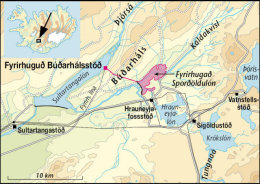
A week after the signing of the deal with Alcan, Landsvirkjun invited tenders on the construction of Búðarháls-powerplant and related constructions. The tenders close at the end of August, and construction is expected to be finished by the fall of 2013. Read More
A petition has been launched, aimed at getting the authorities to thwart the sale of HS Orka (eothermal energy company) to Magma. To sign the petition you have to have an Icelandic I.D. number, and sign that along with your name on the website Orkuaudlindir.is
Following is the announcement from the group behind the petition along with the demands:
Within few days, the final deals concerning Magma Energy Sweden AB’s purchase of HS Orka will get signed. That will give Magma the full private right of utilization over these important and valuable resources for the next 65 years, with a possibility for a further 65 year extension! The company is buying these rights into our resources very cheaply compared to other countries, for an unusually long time compared to other countries and on terms which seem to benefit the buyer in all aspects. Some arguments have been made, stating that we can’t afford not to sell wheras the country needs foreign investors into the country to create employment. But the fact of the matter is that Magma is actually getting the main part of the loans for the purchase in Iceland – on terms which for some reason are not on offer to other companies. Read More
Climate change has made Greenland the next industrial frontier, but at what cost?
Humanity is in denial. We know that our hyperactive extraction of fuels, metals and minerals, and their dirty processing, consuming and dumping for our consumer ‘growth’ society is killing the planet and ourselves. We also know that all of these sugary treats are finite. But like an insolent toddler we continue; more and more, faster and faster – running in denial from the planetary spanking that is undoubtedly coming our way.
I have often hoped that the global emergency of climate change, combined with the inescapable reality of peak oil would wake us up from this selfish resource-gorging, and perhaps it still will before it is too late (too late: I.e tomorrow? 2012? 2020? a few months ago?). But in the meantime, nature has given western capitalism one last laugh. As the ice drips and cracks from Greenland’s white mass it is exposing a treasure trove of minerals, metals, ores and oil (one of the highest concentrations in the world), and plentiful hydro-power to help us heat, break and alter them into things we ‘need’. Just as the candle wick flares and gutters on our oil-driven consumptive society Greenland’s bounty has given it one more chance. One last bright flame, to hide from us the surrounding darkness.
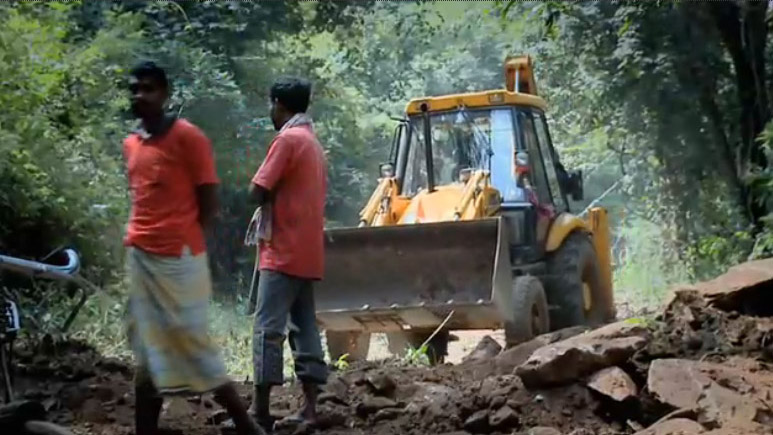
Orissa is the most mineral rich state in India. It is green and fertile, a patchwork of tiny fields and thickly forested mountains with waterfalls tumbling over their red rocks. Like many of the world’s remaining areas of natural fertility, these mountains are largely populated by tribal peoples, which in India are called Adivasis – meaning literally ‘the original inhabitants’ – and are thought to be one of the oldest civilisations in the world. One quarter of the Orissan population are tribal, making it also the ‘poorest’ state in India according to the World Bank. But its figures judge well-being only by monetary exchange, and fail to mention that there has never been a famine recorded here, and that many Adivasis rarely use money, living in balance with the mountains, streams and forests which provide everything they need. In thanks for natures’ providence many Adivasi cultures worship the mountains on which they depend as Gods, and vow to protect their bountiful natural systems from damage. Some of the Orissan mountains are among the last ancient forest capped hills in India, thanks to the determination of tribal inhabitants against British colonial efforts to log them.
Join our resistance against the industrialization of Europe’s last remaining great wilderness and take direct action against heavy industry!
The Struggle So Far
The campaign to defend Europe’s greatest remaining wilderness continues. For the past five years summer direct action camps in Iceland have targeted aluminium smelters, mega-dams and geothermal power plants.
After the terrible destruction as a result of building Europe’s largest dam at Kárahnjúkar and massive geothermal plants at Hengill, there is still time to crush the ‘master plan’ that would have each major glacial river dammed, every substantial geothermal field exploited and the construction of aluminium smelters, an oil refinery, data farms and silicon factories. This would not only destroy unique landscapes and ecosystems but also lead to a massive increase in Iceland’s greenhouse gas emissions. Read More
Here is a video from The Mob Against the Prosecution!, an art event that took place in solidarity and support with the Reykjavík 9, in the Living Art Museum in Reykjavík, Saturday July 3rd. Many of Iceland’s best and sharp musicians, poets, authors and visual artists, took part in the event and thereby showed their rage against the court case that the Icelandic state has filed against these nine individuals. To name few of the artists: Einar Már Guðmundsson, Magnús Pálsson, Katrín Ólafsdóttir, Reykjavík!, Örn Karlsson, RÚST!, Sara Björnsdóttir, Jón Örn Loðmfjörð, Libia Castro and Ólafur Ólafsson.
The artworks from the event have now been gathered and put up in an exhibition in the museum, which will last until August 14th. During that period, more events will take place there, including a panel discussion about the court case, freedom of expression, media and human rights. More information will be published soon on www.rvk9.org and www.nylo.is.
The following text and photos came from Barcelona:
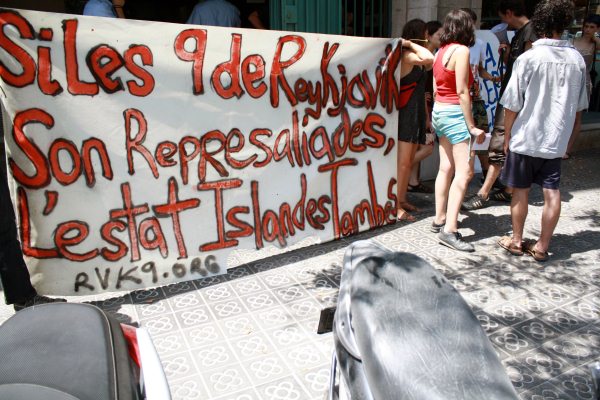
On Thursday, July 8th at about 12:30, 20 people went to the Icelandic consulate in Barcelona to show there outrage against the Icelandic state; for there existence and there heavy repression of the 9 people of Reykjavík because of their actions at the parliament December 8th 2008. If there were any kind of true democracy their demands would have been welcomed and allowed a space. But since obviously there can never be true state democracy, the peoples demands were repressed and silenced. Read More
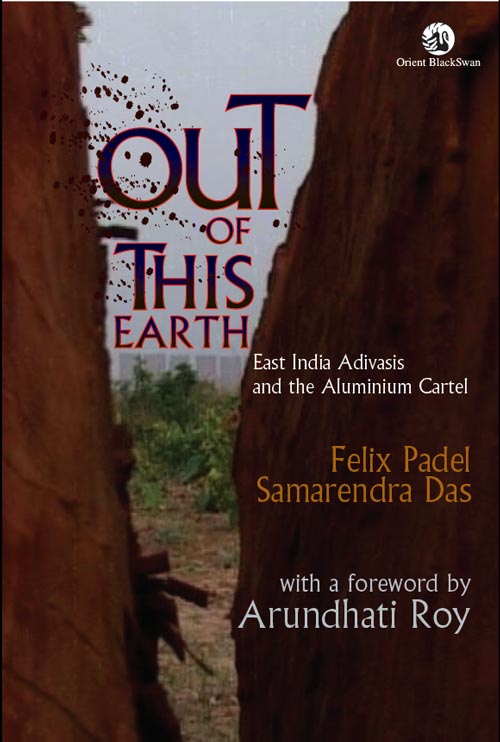
Out of This Earth: East India Adivasis and the Aluminium Cartel
By Felix Padel and Samarendra Das
Published by Orient BlackSwan
Aluminium is a metal that many take for granted in hundreds of artifacts but fewer understand where it comes from and its real costs. Behind the shining image of aluminium is a dark side of environmental catastrophes, political manipulations and cultural genocide.
Out of This Earth: East India Adivasis and the Aluminium Cartel written by Felix Padel and Samarendra Das is an extraordinary book that explores the aluminium industry over its entire life cycle, from the mining of Bauxite to its various end uses.
With a foreward by Arundathi Roy it focuses on the Adivasis struggle against mining activities in the state of Odisha (former Orissa). There industrialization is imposed under the guise of development, growth and poverty alleviation, a process that has already displaced thousands of people and destroyed tribal society‘s structures. The book traces a hidden history of how one country after another has swallowed promises of prosperity and plunged into a cycle of exploitation and unrepayable debt. One of the real contributions of Out of This Earth is the commendable effort of the authors to painstakingly trace the forces that actually drive and control the global aluminium industry – how it is driven by a cartel that fuses mining companies, investment bankers, government deals, metals traders and arms manufacturers. Read More
A glaring inconsistency in the charges against the Reykjavik Nine is frequently pointed at: the nine were actually part of a group of over thirty, which itself was part of a movement of thousands. Here we publish the translation of a statement signed by over seven-hundred (at time of writing) other participants of the so called ‘Cutlery Uprising’. Their analysis is sharp and their demands clear: drop the charges against the nine accused, or charge us all.
The president of Iceland’s Parliament Ásta Ragnheiður Jóhannesdóttir received this statement by hand on 24 June 2010.
 Rio Tinto Alcan (ISAL) has landed all the energy-related deals necessary for the company to start expanding it’s aluminum smelter in Straumsvík. In the middle of June, Landsvirkjun (National Power Company) and Alcan renewed their current deal on energy purchase between the companies. The renewal included an extension on purchase right up until the year 2036, along with an added purchase of 75MW of power, energy Alcan needed to secure to be able to act on their plans on expanding the smelters productional capacity by 40.000 tons a year. This expansion will not exceed the companies current boundaries, thus manouvering around any results from local referandums against the smelters expansion. As mentioned earlier, the expansion also requires these 75MW of power on top of all the energy Alcan is already receiving at bargain prices. But the deal does have some reservations, most prominently a demand that the uncertainity about the taxation of heavy industry in the country be settled before the 31st of August. This is a clear and blatant example of how the power-sector and aluminum lobbyists toy with the countrys government, that has never dared to resist or stand up to this kind of pressure, or blackmails as it is, of financial muscle, so the same should be expected in this case.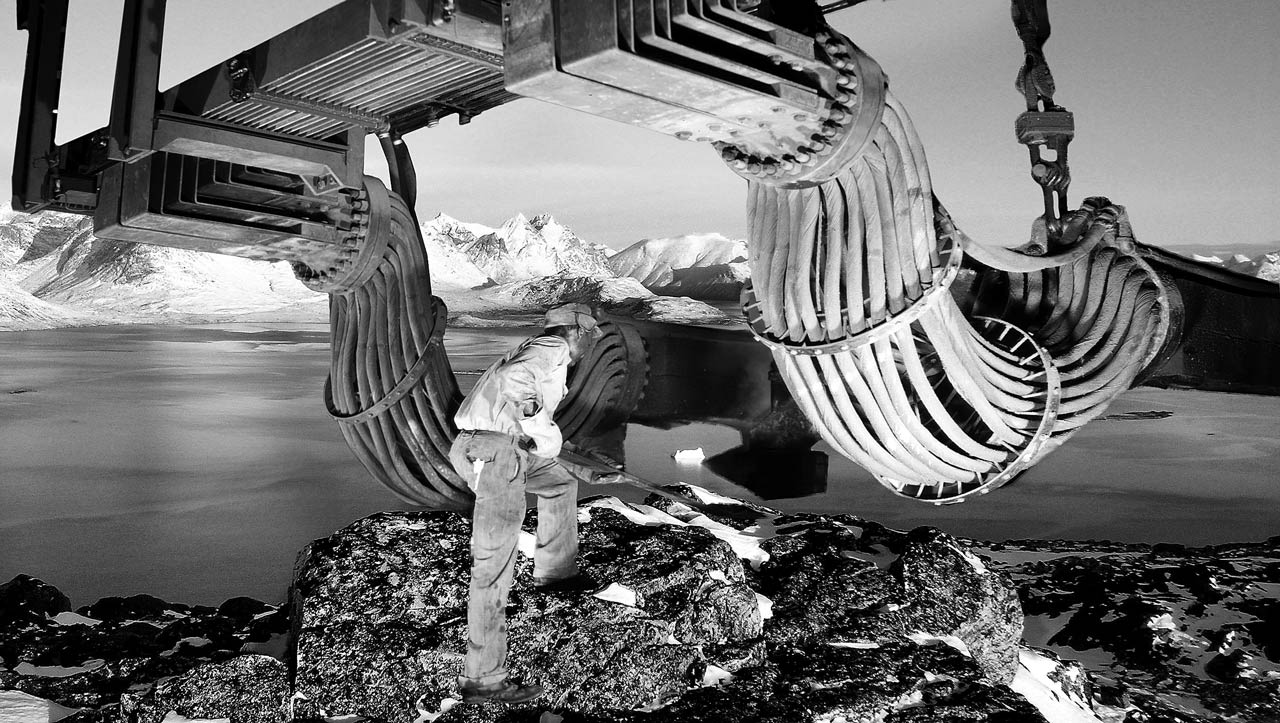
 Orissa is the most mineral rich state in India. It is green and fertile, a patchwork of tiny fields and thickly forested mountains with waterfalls tumbling over their red rocks. Like many of the world’s remaining areas of natural fertility, these mountains are largely populated by tribal peoples, which in India are called Adivasis – meaning literally ‘the original inhabitants’ – and are thought to be one of the oldest civilisations in the world. One quarter of the Orissan population are tribal, making it also the ‘poorest’ state in India according to the World Bank. But its figures judge well-being only by monetary exchange, and fail to mention that there has never been a famine recorded here, and that many Adivasis rarely use money, living in balance with the mountains, streams and forests which provide everything they need. In thanks for natures’ providence many Adivasi cultures worship the mountains on which they depend as Gods, and vow to protect their bountiful natural systems from damage. Some of the Orissan mountains are among the last ancient forest capped hills in India, thanks to the determination of tribal inhabitants against British colonial efforts to log them.