Welcome!

Welcome to SavingIceland.org! Read the S.O.S. and About SI section if you are new to our site. Iceland Under Threat shows the wilderness we need to protect and the corporations bent on ruining it. Make sure to enjoy our video and photo galleries, our in-depth magazine Voices of the Wilderness and subscribe to our mailinglist and follow our Twitter feed to keep up to date.

Aug 23 2012
2 Comments

Andrej Hunko: “Secret Police Networks Must Be Relentlessly Exposed”

Mark Kennedy in Iceland “When police forces and intelligence services engage in international cooperation, parliamentary oversight is the loser. The increasing significance of undercover police networks is making this situation far more critical.” These comments were made by Bundestag Member Andrej Hunko in response to the Federal Government’s answer, which is now available in English (see below), to his Minor Interpellation.

The purpose of the interpellation, a written parliamentary question, was to heighten awareness of the following little-known police structures:

• the Cross-Border Surveillance Working Group (CSW), comprising mobile task forces on surveillance techniques, drawn from 12 EU Member States and Europol;
• Europol’s analysis work file entitled Dolphin, which entails the surveillance of left-wing activists in areas such as animal rights and anarchism;
• the Remote Forensic Software User Group, which was created by the Bundeskriminalamt, the German Federal Criminal Police Office, to promote sales of German Trojan software abroad.
• the European Cooperation Group on Undercover Activities (ECG), comprising spy chiefs from Member States of the EU and from countries such as Russia, Switzerland, Turkey and Ukraine;
• the International Working Group on Undercover Policing (IWG), comprising spy chiefs from European countries as well as from countries such as the United States, Israel, New Zealand and Australia;

Hunko went on to say:

“One of the main parts of the interpellation focused on the undercover activity of British police officer Mark Kennedy, whose infiltration of European leftist movements exemplifies police cooperation conducted beyond the bounds of parliamentary oversight. It remains unclear under whose orders the undercover investigator was operating during the years of his activity.

Kennedy used his infiltration of the Icelandic environmental movement to worm his way into leftist circles from Finland to Portugal through the information events he staged. The Icelandic police are stubbornly rejecting requests from the Minister of Justice to release full details of his activity into the public domain, claiming that disclosure would prejudice British security interests. Even though Members of the Icelandic Parliament have a right to ask questions on police matters, they are not being given any information. Read More

Aug 06 2012

Call Out! Join Us to Stop the AGM of the World’s Most Hated Mining Company: Vedanta

From our friends at Foil Vedanta:

Join us at the eighth annual AGM protest: 28 August 2012 2.00 pm, Lincoln Centre, 18 Lincoln’s Inn Fields, London WC2A 3ED. Nearest tube Holborn (Piccadilly & Central lines) or Chancery Lane (Central).

We are also calling out for a global day of action. Please show your solidarity with movements across India and Africa fighting this devastating company. Email your pictures or statements to savingiceland (at) riseup.net.

Why Peoples’ Movements are Fighting Vedanta:

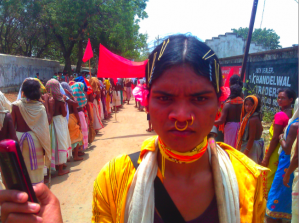
Vedanta plc is a London listed FTSE100 company which has brought death and destruction to thousands. It is owned by billionaire Anil Agarwal and his family through companies in various tax havens. It has been consistently fought by people’s movements but it is being helped by the British government to evolve into a multi-headed monster and spread across India and round the world, diversifying into iron in Goa, Karnataka and Liberia, Zinc in Rajasthan, Namibia, South Africa and Ireland, copper in Zambia and most recently oil in the ecologically fragile Mannar region in Sri Lanka.

Read More

Jul 25 2012

Alcoa’s Power Executive – Who is Influencing Iceland?

STOP ALCOA - From the Saving Iceland protest camp in Snæfell, summer 2006 Aluminium giant Alcoa is one of the most powerful and influential companies in Iceland with it’s poster-child Fjarðaál greenfield1 smelter in Reyðarfjörður, and it’s millions invested in the now failed geothermal smelter project at Bakki, Húsavík. Alcoa’s annual revenue was almost 20 times larger than the Icelandic GDP in 2010 ($21Billion2 versus $1.2 Billion3). Giving it considerable international influence and the potential for frightening leverage in Iceland.They are also becoming one of the biggest lobbyists in Greenland, with eight employees pushing their mega smelter and dam project on this tiny nation.

But who are the faces behind Alcoa? From big pharmaceutical chiefs, to Bilderberg attendees, Iraq profiteers and a Mexican president, Alcoa’s board remains one of the most influential and shadowy of the mining and metals companies. Use the links to Powerbase’s profiles in this article to find out more.

Read More

Jul 15 2012
3 Comments

Iceland Inside Fortress Europe? — Undercover Operations, Controlling Unwanted Migration and Policing the Cyberspace

Saving Iceland presents a talk by Matthias Monroy, journalist and political activist from Germany, in the Reykjavík Academia, Monday July 23 at 20:00.

Fortress Europe The Mark Kennedy case illustrated how deeply Iceland is involved in European secret police networks that have been infiltrating environmentalist, anarchist and other leftist resistance movements since the late 1990s. The exposure of the undercover policeman also showed that it is near impossible to bring illegal practises of cross-border policing to courts: It is mostly unclear, which police authority in which country is responsible. In 2005 Kennedy infiltrated the Saving Iceland campaign, which resisted the dams at Kárahnjúkar in Iceland’s eastern highlands. He used his Icelandic connections and experience for a European-wide speaking tour to infiltrate activist groups in numerous countries.

Iceland is also involved in policing the EU migration regime, which will start the huge surveillance network EUROSUR in two years. This satellite surveillance involving usage of drones is complemented by the “Smart Border Package” facilitating border crossing by using biometric features and other technical tools. At the same time the EU changes the Schengen Border Codex, in which Iceland is also taking part. The agreement was one of the most important achievements for free travel within the EU. Now France and Germany constrain more border controls to block international protesters or exclude countries like Greece from the Schengen system. Iceland uses the measure, for example, to control the movements of motorcycle gangs.

To block unwanted migrants crossing the Evros river between Greece and Turkey, the EU is running a research program regarding the usage of land robots for border surveillance. The EU border agency FRONTEX, for which the Icelandic Coast Guard has worked in the Mediterranean, is now operating together with the Turkish government and is helping to install a police and customs centre at the common border with Bulgaria and Greece. For the first time, this structure includes the police agency EUROPOL, whose guidelines normally exclude the fight against migration.

To the contrary, the main pillar of EUROPOL becomes the control of so called “cybercrime” and “cyberterrorism”. The agency is running large databases, surveillance technology and digital forensic tools to support the police forces of the 27 member states in cross-border operations. EUROPOL is more and more controlling alleged “suspicious” behaviour on the internet, which leads to more need of safety for cyber activists as well as all citizens.

In his talk, Monroy will explain briefly the police networks built up by the European Union concerning undercover policing, the fight against unwanted migration and cyberspace. Monroy will also attempt to explain how Iceland is involved in or affected by current and future projects.

The talk will take place in the Reykjavík Academia, which also houses Iceland’s only anarchist library, on Monday July 23 at 20:00. The Academia is located at Hringbraut 121, 107 Reykjavík. The talk will be in English and entrance is free.

For more information write to savingiceland [at] riseup.net

Saving Iceland’s archive of articles regarding the Mark Kennedy case

Matthias Monroy, journalist and political activist

Jun 11 2012

Carnival of Dirt – Friday 15 June London

On Friday 15 June 2012, London will experience its first ever Carnival of Dirt, a carnival against London’s mining industry. More than 30 activist groups from London and around the world have come together to highlight the deeds of mining and extraction companies. All those who can make it should go!


Read More

Jun 07 2012
2 Comments

Accused of Betrayal Because of His Opinions

Crane Action at the Alcoa construction site On May 18, Icelandic newspaper DV published an interview with Janne Sigurðsson, director of Alcoa Fjarðaál since the beginning of this year. In the interview, Janne describes, amongst other things, crisis meetings that were held within the company due to the protests against the construction of the Kárahnjúkar dams and the aluminium smelter in Reyðarfjörður. With gross and incongruous sentimentality she compares the society in Eastern Iceland, during the time of the construction, with a dying grandmother, whose cure is fought against by the anti-Alcoa protesters. Janne also maintains — and is conveniently not asked to provide the factual backup — that only five people from the East were opposed to these constructions.

On May 21, however, DV published an interview with Þórhallur Þorsteinsson, one of the people from Eastern Iceland who had the courage to oppose the construction. In the interview, which turns Janne’s claims upside down, it emerges how heavy the oppression was in the East during the preamble and the building of the dams and smelter was — people where “oppressed into obedience” as Þórhallur phrases it. He talks about his experience, loss of friends, murder threats, the attempts of influential people to dispel him from his work, and the way the Icelandic police — and the national church — dealt with the protest camps organized by Saving Iceland, which lead him to wonder if he actually lived in a police state.

Þórhallur Þorsteinsson Þórhallur Þorsteinsson is one of the people from Eastern Iceland who protested against the construction of the Kárahnjúkar dams. For that sake, he was bandied about as an “environmentalist traitor”, accused of standing in the way of the progress of society. Influential people attempted to dispel him from his job, he had to answer for his opinions in front of his employers, and his friends turned against him. The preparations for the construction started in 1999, but the construction itself started in 2002. The power plant started operating in 2007 but the wounds have not healed though a few years have passed since the conflict reached its climax.

“There are certain homes here in Egilsstaðir that I do not enter due to the conflict. Before, I used to visit these homes once or twice a week. I am not sure if I would be welcome there today. Maybe. But in these homes I was, without grounds, hurt so badly that I have no reason to go there again. Now I greet these people but I have no reason to enter their homes. I was virtually persecuted,” Þórhallur says, sitting in an armchair in his home in Egilsstaðir. Read More

May 30 2012
2 Comments

The Unmasking of the Geothermal Green Myth Continues, and Other News

Electricity Recent studies show links between asthma and sulphur pollution from geothermal power plants. Reykjavík Energy denies their connection with newly discovered effluent water lagoons in Hellsheiði. The Parliament’s Industries Committee orders a report that condemns preservation of nature, presented in a parliamentary resolution for Iceland’s Energy Master Plans. Alterra Power announces lower revenues in Iceland and their plans to enlarge the Reykjanesvirkjun geothermal power plant despite fears of over-exploitation. Greenland faces Alcoa’s plans of an import of cheap Chinese labour en masse, while Cairn Energy dumps toxic materials into the ocean off the country’s shores.

This is the content of Saving Iceland’s first round of brief monthly news from the struggle over Iceland’s wilderness and connected struggles around the world.

Hellisheiði: Asthma, Sulphur Pollution and Effluent Water Lagoon

Those who promote large-scale geothermal energy production as green and environmentally friendly, are once again forced to face another backlash as a recent research suggests a direct link between sulphur pollution from the Hellisheiði geothermal plant and asthma among the inhabitants of Reykjavík. The results of this particular research, which was done by Hanne Krage Carlsen, doctorate student of Public Health at the University of Iceland, were published in the Environmental Research journal earlier this year, showing that the purchasing of asthma medicine increases between 5 and 10 percent in accordance with higher sulphur pollution numbers in the capital area of Reykjavík. Read More

May 26 2012

Renewable Resources, Unsustainable Utilization

The Hellisheiði Geothermal Plant In April this year, Iceland’s Ministers of the Environment and of Industry presented a parliamentary resolution for Iceland’s Energy Master Plan, in which the controversial plans to dam river Þjórsá are put on hold while the unique geothermal areas of the Reykjanes Peninsula are set for a monstrous exploitation — one that will turn the peninsula into a continuous industrial zone. For the last weeks, the resolution has been in the hands of the Industries Committee of Iceland’s parliament — a process that included more than 300 letters of remarks, sent in by individuals, associations, institutions and corporations.

The remarks can generally be split into two groups based on senders and views: firstly, individuals and environmentalist associations who above all protest the afore-mentioned plans for the Reykjanes peninsula; secondly, companies and institutions with vested interests in the further heavy industrialization of Iceland who demand that the Master Plan’s second phase goes unaltered through parliament — that is, as it was before the parliamentary resolution was presented, in which the planned Þjórsá dams and other hydro power plants are included in the exploitation category.

One of the remarks sent in differs from the others as it evaluates energy production and nature conservation in a larger, long-term context. That remark, written by Helga Katrín Tryggvadóttir, MA in development studies, is published here below, translated from Icelandic by Saving Iceland.

I find myself inclined to make a few remarks regarding the Industries Committee’s discussion about the Energy Master Plan. My remarks do not concern particular natural areas but rather the comprehensive ideas regarding the scope and nature of the protection and exploitation of natural areas. Since the making of the Energy Master Plan begun, much has changed for the better as researches and knowledge on energy production and nature conservation continuously advance. The social pattern as well as opinions on nature conservation have also changed rapidly since the first draft for an Energy Master Plan was published, and the emphasis on nature conservation constantly increases. With this in mind it is necessary to take into account that during the next years, this emphasis on nature conservation is likely to increase even further. Therefore it is important for the Industries Committee to remember that keeping natural areas in pending does not prevent future utilization, whereas areas exploited today cannot be protected tomorrow. Read More

May 21 2012
1 Comment

Glencore: Reaping Huge Profits From Life’s Essentials

This video by Patrick Clair tells the story of commodity broker Glencore International, the biggest shareholder of Century Aluminum, and the company’s dangerously powerful position on the world’s markets.

Click here to read Saving Iceland’s dossier on Glencore, Century and the incestuous world of mining.

May 11 2012

The Geothermal Ecocide of Reykjanes Peninsula

Tuff Ridge in Krýsuvík - Photo: Ellert Grétarsson After thirteen years of environmental, economic and technical evaluations, followed by a proposition for a parliamentary solution and a three month long public comments process, wherein 225 reviews where handed in — we are now witnessing the final steps in the making of Iceland’s Master Plan for Hydro and Geothermal Energy Resources. The plan, which in diplomatic language is supposed to “lay the foundation for a long-term agreement upon the exploitation and protection of Iceland’s natural resources,” has now been presented as a bill by the Ministers of Environment and of Industry, respectively, and is currently awaiting discussion and further bureaucratic processes in parliament.

Treated as the Master Plan’s trash can, the unique geothermal areas on the Reykjanes peninsula get a particularly harsh deal. Out of the peninsula’s nineteen energy potential areas, only three are listed for protection while seven are set for exploitation in addition to the four that have already been harnessed. Five additional areas are kept pending, more likely than not to be set for exploitation later. Existing plans for energy production outline how the peninsula is set to be turned into a single and continuous industrial zone, and the power companies seem to be simply waiting for a further green light to exploit the area. All this in order to further feed the aluminium industry.

In this overview we take a look at nine of these nineteen areas — those from the west of Gráuhnúkar — of which only one is to be protected according to the Master Plan. We look at the plans on the drawing board, their current status, the key companies involved, the already existing power plants, the threatened areas, and at last but not least: possible targets for direct action. On the map below, these areas are marked from number one to nine. Obviously the map only shows the areas at stake and the reader has to use her or his imagination to fill in power lines and the rest of the necessary infrastructure. Most of the following photos are taken by Ellert Grétarsson — click here and here for more of his photos.

Energy Options

Read More