'Ecology' Tag Archive

Nov 22 2007

Iceland’s Special Kyoto Deal Still Not Enough for Industrial Plans


7/11/2007

Prime minister Geir H. Harde has revealed his opinion that Iceland should negotiate for another special deal on carbon emmissions in the upcoming 2012 Kyoto agreement renewal. Read More

Nov 08 2007
1 Comment

Hálslón Tunnel Leakages Poisoning Highlands


Tunnel Halslon

photo by Tom Olliver

Saving Iceland
7 November 2007

Only two days after the glorious inauguration of the turbines at Kárahnjúkar dam, further structural problems are already emerging.

Icelandic paper Morgunbladid revealed today that severe leakages in the tunnels leading to the turbines are releasing 200 litres of water per second onto the ground surface, forming a swamp currently about a third of a hectare in size. When asked to comment on the situation, Kárahnjúkarvirkjun spokesperson Sigurdur Arnalds said the water loss was of no consequence.

Regardless of whether or not we should believe Arnalds, the revelation that tunnel water is reaching the ground water breaches one of Siv Fridleifsdottir’s [ex-Minister of Environment who pushed through the project] fundamental stipulations (no. 14):
That Kárahnjúkarvirkjun should NOT interfere with ground water levels. Read More

Oct 26 2007

Third Major Glacial River to be Destroyed by ALCOA and Landsvirkjun


DettifossDettifoss

In an interview on the radio program ‘Spegillinn’ on 23 October geophysicist Páll Einarsson said that an eruption in Upptyppingar would probably disrupt the flow of the immense glacial river Jökulsá á Fjöllum. Upptyppingar volcano lies on the bank of Jökulsá á Fjöllum. Einarsson said that the first effects of the eruption would be that the river would evaporate from the heat of the lava. Running lava would block the course of the river so that when the river would materialize again it would collect in a lake that would then overflow with unknown consequences.

This flood could pose a great danger to the surrounding farming communities and hikers, who will be almost untraceable in the great wilderness. Eight hours notice would not be enough time to warn people and secure the wilderness say rescue services.

So, it turns out that the Kárahnjukar project, which so far has entailed the complete destruction of two of Iceland’s major glacial rivers, Jökulá á Brú and Jökulsá á Fljótsdal, just to run an aluminium smelter owned by arms manufacturer ALCOA, is in fact likely to destroy the third major glacial river, the magnificent Jökulsá á Fjöllum.

Members of parliament have repeatedly claimed that they wanted to protect the whole of Jökulsá á Fjöllum, even ALCOA have paid lip service to the proposal.

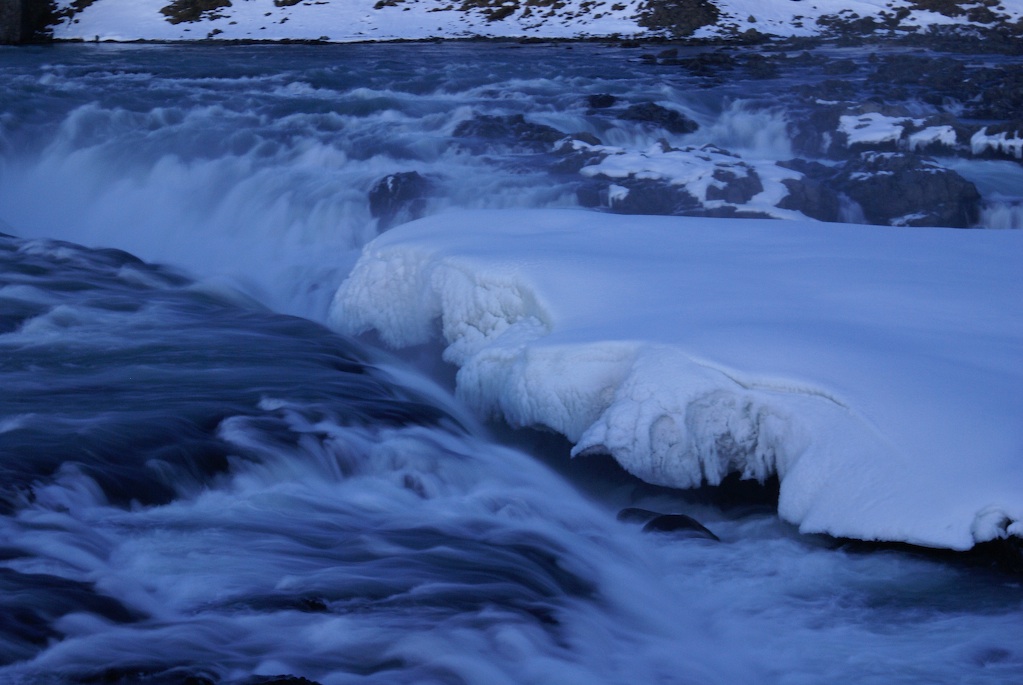
Jökulsá á Fjöllum hosts Europe’s most powerful waterfall, Dettifoss. The river runs through the protected canyon of Jökulsárgljúfur National Park and past the magical area of Hljóðaklettar, much loved by tourists. All this is now threatened by the man-made eruption.

Some would say that this is vandalism of catastrophic proportions.

See also: >Imminent Man-Made Volcanic Eruption Courtesy of ALCOA and Icelandic Government

Oct 22 2007
2 Comments

Imminent Man-Made Volcanic Eruption Courtesy of ALCOA and Icelandic Government


Upptyppingar

Upptyppingar

Today at the annual general meeting of the Icelandic Glaciological Society the geophysicist Páll Einarsson confirmed that a volcanic eruption is imminent in one or two years time in Upptyppingar near Askja. He said this was a direct result of the inundation of Kárahnjúkar. He also claimed that the earthquakes that had started in February, ceased temporarily when the inundation was halted, but as soon as it was continued the tremors began again. The water in Halslon weighs two billion tons now and over 4000 earthquakes have been recorded since February.
Einarsson added that it was a mystery why the effects of the inundation were felt 20 kilometers away from Karahnjukar, instead of in the immediate vicinity of the dams.

Read More

Oct 08 2007

Behind the Shining: Aluminum’s Dark Side


An IPS/SEEN/TNI report, 2001

This important and lengthy report from the Washington based Sustainable Energy and Economy Network is highly informative about the operational structure of the aluminum industry and the resulting impacts on human rights and the environment.

Read More

Pages: 1 2 3 4 5 6 7 8 9 10 11 12 13 14 15 16 17 18 19 20 21 22 23 24 25

Oct 08 2007

Vedanta update


6th October 2007

This commentary by Mines and Communities

Once again India’s Supreme Court (SC) has deferred taking a decision on the mining of bauxite in Orissa’s Niyamgiri Hills, although the central government’s Ministry of Environment & Forests (MoEF) did its best to steamroller assent for Vedanta’s potentially very damaging project. Read More

Sep 25 2007

Videos about the horrors of bauxite mining


Jamaica Bauxite Environmental Organization – Excellent video section showing the horrors of the mining of bauxite…

Sep 14 2007

Orissa Update


Mines and Communities Vedanta update

Vedanta Update

7th September 2007

It’s one of the longest-enduring conflicts over a mine project in recent times. Three years ago, the Indian Supreme Court’s Central Empowered Committee (CEC) on forestry issues, condemned in no uncertain terms plans by UK-based Vedanta Resources plc to mine the Nyamgiri Hills in Orissa for bauxite. It also found that Vedanta’s alumina refinery – deliberately located at Lanjigarh, next to the hills – was being constructed in violation of forest protection legislation, and that the company had lied on several occasions in its defence of the huge project. Read More

Sep 14 2007
2 Comments

Global Actions Against Heavy Industry!


Trinidad protestOn the 12th of September 2007, the Global Day of Action Against Heavy Industry, people in South Africa, Iceland, Trinidad, Denmark, New York, Holland and the UK protested against the heavy industrialisation of our planet. This marked the first coordinated event of a new and growing global movement that began at the 2007 Saving Iceland protest camp in Ölfus, Iceland. The common target of these protests against heavy industry was the aluminium industry, in particular the corporations Alcan/Rio-Tinto and Alcoa. Read More

Sep 07 2007

‘Glacial Rivers Reduce Pollution on Earth’ by Gudmundur Páll Ólafsson


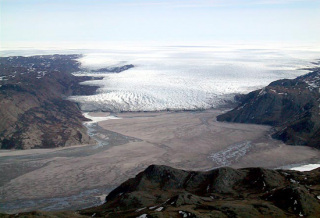
Glacial rivers are not only the lifeblood of Iceland, but also of the whole planet.

River water contains sediment in suspension and various substances in solution; glacial rivers, especially, carry a large amount of sediment which increases as the atmosphere grows warmer.

River of Life

Rivers of Life

Glacial rivers carry the sediment out to sea, where it takes on a new and important role in binding the greenhouse gas carbon dioxide (CO2) with calcium (Ca) and converting it into calcite and other carbonate minerals, immensely important in the ocean ecosystems of the world. Thus glacial rivers reduce pollution on Earth. This effect is greatest in recently formed volcanic territory such as Iceland, and the binding effect increases with rising atmospheric temperature.

Glacial rivers bind this gas which, along with some other gases, causes global warming and threatens the future of life of Earth.

When a glacial river is harnessed to generate electricity, this important function, and the binding of the greenhouse gas CO2, is diminished. What they generate is not GREEN ENERGY, as the advocates of hydro-power plants and heavy industry maintain, but BLACK ENERGY.

Dams and reservoirs hinder the function of glacial sediment in the oceans, and hence hydro-electric power plants that harness glacial rivers are far more harmful than has hitherto been believed. Read More