'Economics'
Tag Archive
Oct 27 2006
ALCOA, Australia, Bechtel, Cultural, Economics, India, Jamaica, Laws, Pollution, Surinam, Trinidad & Tobago
“What you got…..we don’t want,
what you’re selling…..we ain’t buying!
So no matter, how hard you’re trying,
we want no industrial wasteland in our yard”
(Anti-Smelter Warriors Anthem, chorus)
by Sujatha Fernandes, CorpWatch September 6th, 2006
The roads that wander through the southwestern peninsula of Trinidad pass small fishing villages, mangrove swamps, and coconut plantations; they skirt herds of buffalypso and reveal sheltered beach coves. This February, Alcoa signed an agreement in principle with the Trinidad and Tobago Government that threatens to fundamentally alter this gentle landscape. Plans by the Pittsburgh-based manufacturing company to build a large aluminum smelter have sparked criticism from local residents and environmentalists. Read More
Oct 02 2006
ALCOA, Democracy deficit, Economics, Repression, Saving Iceland
Today Iceland waves goodbye to the relic of a form of American empire that precedes its supra-national corporate invasion (Alcoa).
After 55 years of resentment the American military have finally abandoned its NATO military base in Keflavík, leaving complete control of the base to Iceland (or the Icelandic state, probably). Icelanders have fought hard against this imposition (see the great Icelandic author Haldor Laxness’ book “Atomic Station”). Read More
Sep 27 2006
Actions, ALCOA, Bechtel, Climate Change, Corruption, Democracy deficit, Ecology, Economics, Impregilo, Kárahnjúkar, Landsvirkjun, Laws, Pollution
27/9/2006
A historical amount of Icelanders today marched in four different cities against the damming of Kárahnjúkar. Following a call from retiring television reporter and nature enthusiast Ómar Ragnarsson to march on the day before the dam is scheduled to be flooded, up to 15,000 people in total walked the streets in the Reykjavik, Akureyri, Egilsstaðir and Ísafjörður. ”
Read More
Sep 22 2006
ALCOA, Andri Snaer Magnason, Democracy deficit, Ecology, Economics, Energy Prices, Greenwash, Impregilo, Kárahnjúkar, Landsvirkjun, Pollution, Repression, Saving Iceland
By Hanna Björk
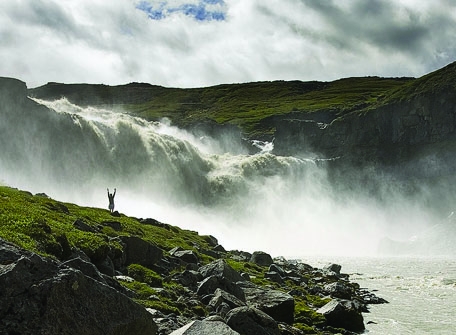
Saying that the Kárahnjúkar dam has been controversial is an understatement. This hydro-power project, planned by Iceland’s government to dam glacial river flows and produce hydroelectric power for Alcoa’s aluminum smelter in Reyðarfjörður, east Iceland caused a debate that started a few years back. It has only been escalating. Read More
Sep 04 2006
ALCOA, Economic Collapse, Economics, Impregilo, Kárahnjúkar, Landsvirkjun
The Iceland Nature Conservation Association claims that the National Power Company will incur a loss of between ISK 20-30 billion through its investment in the Kárahnjúkavirkjun dam project in east Iceland. The calculations are based on figures released by the National Power Company in a reviewed profitability assessment for the dam. Morgunbladid online reports.
In a press release, the Iceland Nature Conservation Association states that it has often “criticized the negative rate of return of the Kárahnjúkavirkjun dam and in particular how low the requirements by the National Power Company (the owners) are for its investment to return a profit”.
The Iceland Nature Conservation Association bases its calculations on the Weighted Average Cost of Capital being 8-9 percent, as is considered “normal and natural based on market criteria.” Read More
May 15 2006
Actions, ALCOA, Economics, Kárahnjúkar
The conference was organized by the Economist magazine but sponsored by Alcoa and other companies. In the publicity material for the conference, the Economist (in its guise as the ’Economist Intelligence Unit’!) promoted the conference as discussing amongst other things how Iceland can supply all of Europe’s energy needs with clean energy.
In the build up to the conference, outraged Icelanders contacted the Economist and pointed out that even if every drop of energy was squeezed from the land without any other considerations, it would still only produce 1% of Europe’s requirements. Also the energy that will be produced is actually very far from clean energy. In fact its filthy dirty.
The Economist replied that what was in the publicity material was, “marketing-speak geared to creating interest for the event.” They continued, “The journalistic approach from The Economist itself would certainly carry a different, more balanced and researched perspective.”
The unwitting honesty of this reply speaks volumes. Nuff said.
More wriggling and squirming followed about the role of the sponsoring companies, (Just supporting the conference financially, otherwise neutral.) Then they tried to suggest that the conference represented a balance of the opinions on the issues under discussion. Only problem with that being that the, ‘critical’ voice was that of a conservative opposition MP, who had actually supported the dam project wholeheartedly! Read More
Mar 16 2006
Corruption, Democracy deficit, Denmark, Economics, Impregilo, Kárahnjúkar, Landsvirkjun, Laws, Pollution
In this book Bent Flyvbjerg and others outline the exact blueprint of the methods employed by the Icelandic authorities to drive through their energy policies. Original edition is in Danish.
“Megaprojects and Risk provides the first detailed examination of the phenomenon of megaprojects. It is a fascinating account of how the promoters of multi-billion dollar megaprojects systematically and self-servingly misinform parliaments, the public and the media in order to get projects approved and built. It shows, in unusual depth, how the formula for approval is an unhealthy cocktail of underestimated costs, overestimated revenues, undervalued environmental impacts and overvalued economic development effects. This results in projects that are extremely risky, but where the risk is concealed from MPs, taxpayers and investors. The authors not only explore the problems but also suggest practical solutions drawing on theory, experience and hard, scientific evidence from the several hundred projects in twenty nations and five continents that illustrate the book. Accessibly written, it will be the standard reference for students, scholars, planners, economists, auditors, politicians and interested citizens for many years to come.” Read More
Mar 13 2006
ALCOA, Century Aluminum, Economic Collapse, Economics, Rio Tinto Alcan
3 March 2006
Iceland Review
Icelandic National Broadcasting Service, RÚV, continues to report on public reaction to the announcement earlier this week of a memorandum of understanding between Alcoa and the Icelandic government concerning a feasibility study for a new aluminum smelter near Húsavík.
RÚV quotes professor of economics and director of the Economics Institute at the University of Iceland, Tryggvi Thór Herbertsson, saying that the Icelandic economy is unable to handle all the projects currently being planned.
In addition to Alcoa’s proposed new smelter, Alcan and Century Aluminum are also reported to be interested in adding capacity to their existing operations in Iceland.
Other proposed state-sponsored projects include a new hospital in Reykjavík and a new road from Reykjavík to Kjalarnes, the so-called Sundabraut.
According to RÚV, Tryggvi Thór said that “nobody thinks we can carry all of [the proposed projects] out at the same time…that would be far too much.”
Jón Bjarki Bentsson at Íslandsbanki’s research department said to RÚV that if the smelters are built other export industries would run into trouble. He also said that the Icelandic economy was flexible and had adjusted well in the past, both to downturns and upswings. If the projects were to move ahead, Icelanders could expect high interest rates and a high exchange rate, said Jón Bjarki.
Mar 09 2006
Ecology, Economics, India, Ólafur Páll Sigurdsson, Orissa, Pollution, Repression, Rio Tinto Alcan, Saving Iceland
Alcan has announced that it may well pull out of Iceland if it does not get the go-ahead to expand its factory at Straumsvík. The announcement was made after talks between Alcan and the PM Asgrimsson. Alcan would appear to have been pressuring the Icelandic Government into making available electricity to support the expansion program. This would entail the building of more dams and thus continuing the ongoing ecological destruction of the Icelandic wilderness.
This is a clear example of a large corporation attempting to exert economic dominance over a small democracy, a tactic echoed throughout the world where corporations gain ground to unduly influence goverments economic policy.
Saving Iceland rejoices at the idea of ALCAN leaving Iceland for good. They should also have the decency to leave India and the long suffering Adivasi people of Kashipur in peace. See www.kashipur.info
Celebrations have been announced in Reykjavik.
Mar 03 2006
Century Aluminum, Ecology, Economics, Landsvirkjun, Laws, Rio Tinto Alcan, Þjórsárver
UPDATE
March 2007
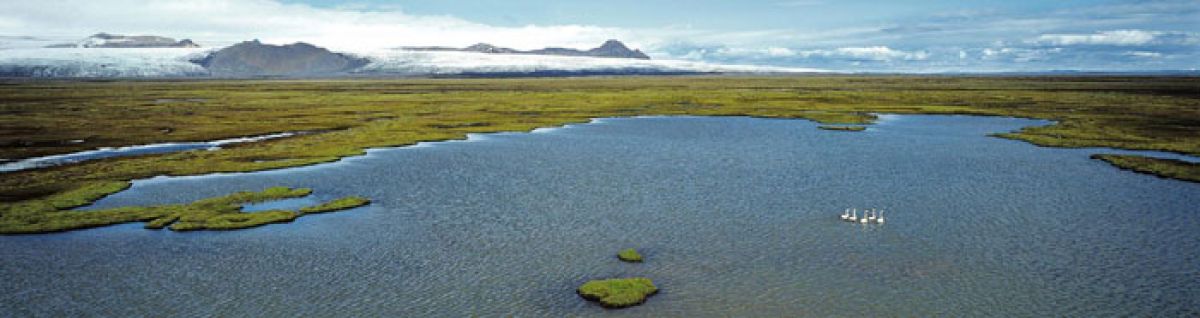
Tjórsárver are certainly not safe yet. Since the below was written the Conservatives have taken over the majority in Reykjavík City Council. They hurriedly sold the council’s 45% share in Landsvirkjun to the State. Since that Landsvirkjun have announced that they want to go ahead with destroying Thjórsárver. However, they first want to make three dams in the lower part of the river of Thjórsá. This is also opposed by many people, including locals. Work on the three dams is due to start in the autumn of 2007. They are to provide energy for the enlarged ALCAN factory at Straumsvík in Hafnarfjörður. The people of Hafnarfjörður will vote in a referendum on this enlargement 31 March. It seems the inhabitants of Hafnarfjördur hold the fate of Thjórsá, Langisjór and Thjórsárver in their hands. If they vote in favour of ALCAN the rest of the Icelandic nation and the international community will have to step in.
Read More