Articles
May 11 2011
Laws, Repression, RVK9
By Magnús Sveinn Helgason
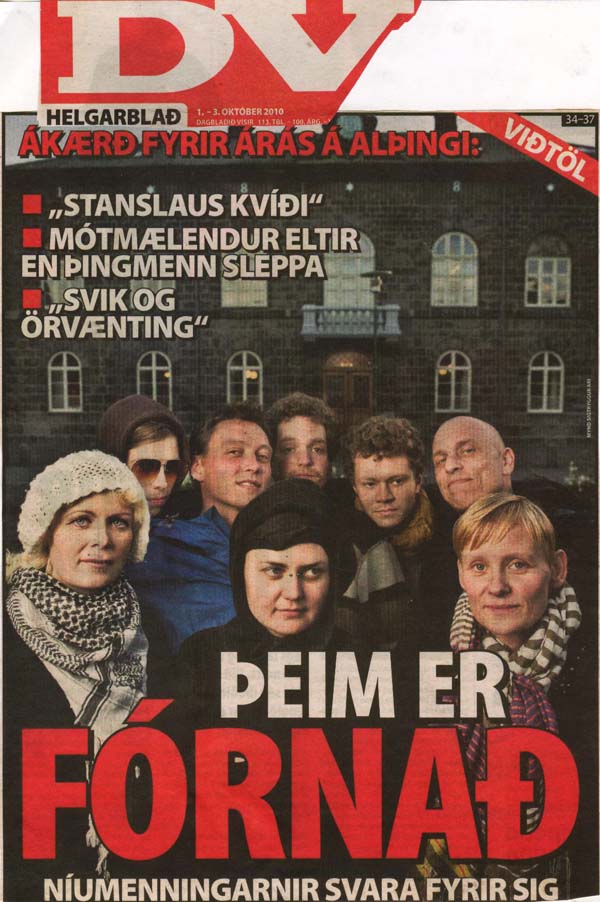
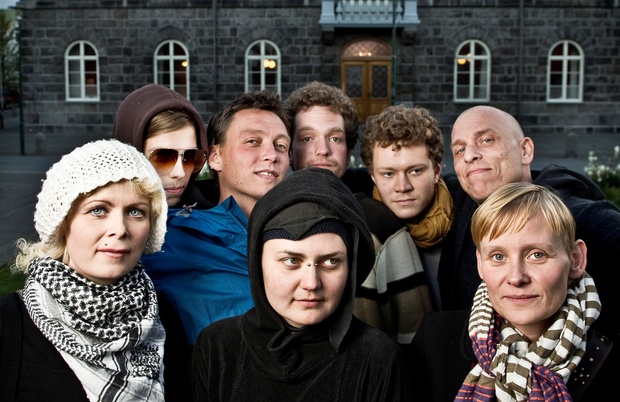
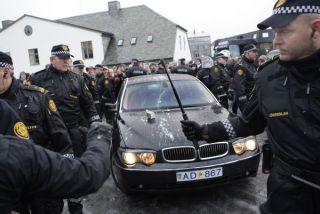
By mid March, the case against the Reykjavík Nine (who had been accused of conspiracy to attack Alþingi with the intent of compromising its “independence and sanctity”) finally came to a close when the state prosecutor decided not to appeal the Reykjavík district court ruling in the case. The nine had been acquitted of all the major charges of the prosecution.
Not for lack of evidence or because the nine were able to slip through legal loopholes. No, the court found that there was absolutely no evidence to support the case of the prosecution; that there was absolutely nothing that indicated the group had ever intended to do anything but exercise its constitutional right to protest peacefully in a public space. The court did, however, find four protesters guilty of relatively minor offences: disobeying police orders and obstructing public officials performing their duties. Read More
May 03 2011
2 Comments
Corruption, Democracy deficit, Laws, Mark Kennedy, Ólafur Páll Sigurdsson, Repression, RVK9, Saving Iceland
In January 2011, when the illegal covert actions of UK police in Icelandic jurisdiction hit the pages of the international media, the local police forces of the two Icelandic towns Seydisfjörður and Eskifjörður in Eastern Iceland issued a statement in response to queries from the Icelandic National Broadcaster (RUV). The Broadcaster asked if the Icelandic police had been aware of the infiltration of the Saving Iceland network by British police spy Mark Kennedy. According to the Broadcaster the two police forces denied that they had had any “dealings with Kennedy during the protests against the Kárahnjúkar dams.”
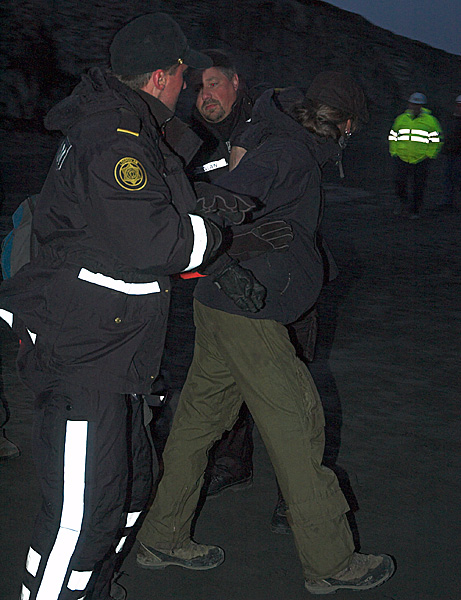
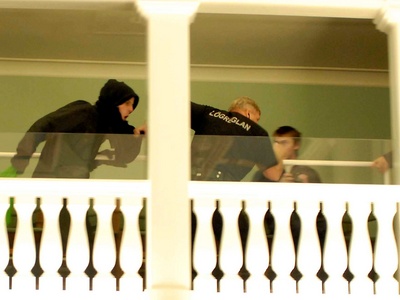
Saving Iceland can now reveal evidence that shows clearly that the two police forces are not telling the truth about their dealings with Kennedy. The top photograph accompanying this statement shows two Icelandic police officers grappling with Mark Kennedy during a Saving Iceland action that took place on 26 July 2005 at the site of the Kárahnjúkar central dam. Clearly the incident pictured shows that the Icelandic police most certainly had “dealings” with the British spy. Read More
Apr 14 2011
4 Comments
ALCOA, Corruption, Democracy deficit, Economics, Energy Prices, Greenland, Impregilo, Jaap Krater, Kárahnjúkar, Landsvirkjun, Miriam Rose, Workers Rights
By Miriam Rose
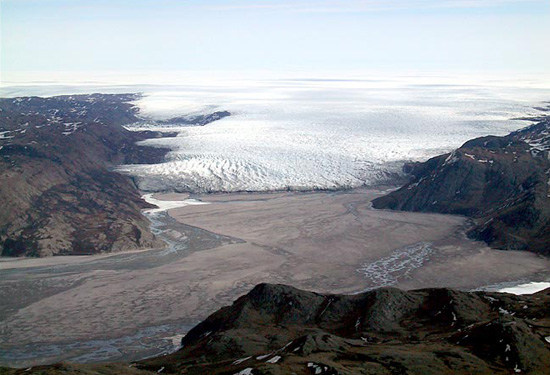
After many years of preparations the Greenlandic government say the final decision on Alcoa’s proposed smelter will be taken at the spring 2012 of the parliament. It is more likely, as the global history of the industry and the evidence in Greenland tells us, that the decision has in fact already been made undemocratically behind closed doors, despite the decreasing support of the Greenlandic people. In fact Alcoa and the Greenland government are so keen on passing the project that they have just hired an eighth employee at their national company Greenland Development- formed to enable the industry to go ahead. Juaaka Lyberth’s explicit remit is to influence public opinion on the smelter through the media. Greenland Development paints a rosy picture of an aluminium future for Greenland, but will their promises of prosperity come true? A comparison to Alcoa’s Fjardaal project in East Iceland suggests that many will not. Read More
Apr 12 2011
Bauxite, Hungary, India, Orissa, Pollution, Red Mud, Samarendra Das, Vedanta
Felix Padel/ Samarendra Das
First Published : 20 Oct 2010 on Expressbuzz.com
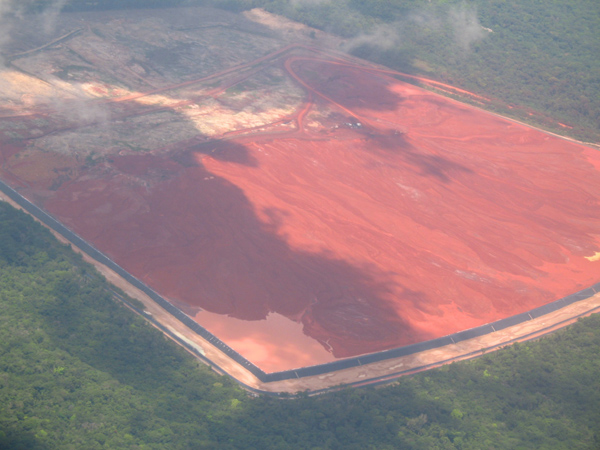
When news spread that the red mud pond in a Hungarian alumina refinery had broken open on October 3 [2010], spilling toxic sludge over a huge area, killing people and livestock, this confirmed our worst fears regarding new refineries going up in Orissa [India] and neighbouring states. For Hungarians a nightmare scenario has begun, as their country faces to its worst-ever environmental disaster. Apart from villagers killed or maimed by the toxic sludge, many farmers face economic ruin, as their fields are contaminated beyond repair. How much worse would a similar disaster be in India, where the population density of farmers is much higher? Read More
Mar 28 2011
ALCOA, Century Aluminum, Economics
The Los Angeles Times
Henry Chu, Reporting from Grundartangi, Iceland
Some say aluminum is vital to Iceland’s budding economic recovery. Others say the industry was at the root of the nation’s 2008 economic collapse.
Part of the cure — or cause — of Iceland’s spectacular economic meltdown sits here on a rugged fiord backed by frigid blue waters and snowcapped mountains. Read More
Mar 05 2011
1 Comment
ALCOA, Bjarnarflag, Climate Change, Geothermal Energy, Jaap Krater, Jökulsá á Fjöllum, Krafla and Þeistareykir, Landsvirkjun, Saving Iceland, Skagafjörður, Skjálfandafljót
By Jaap Krater
Last spring ALCOA released the first draft of the joint environmental impact assessment for the proposed Bakki smelter and power plants at Krafla and Theistareykir. Recently Iceland’s National Planning Agency commented on the draft assessment in a damning commentary.
The agency stated that the environmental impacts of the project are high and cannot be mitigated. 17,000 ha of untouched wilderness will be affected. Greenhouse gas emissions of the project would constitute 14% of Iceland’s total. There is a great deal of uncertainty on the full impact of the planned power plants and particularly on how much geothermal energy can be sustainably produced. Finally, the assessed energy projects will not be able to fully power the smelter, with 140 MW of capacity missing.
This confirms three key points of critique on the smelter that we have been voicing for several years now. Read More
Mar 01 2011
Climate Change, COP15, Democracy deficit, direct action, Economic Collapse, Mark Kennedy, Repression, RVK9, Saving Iceland, Workers Rights
By Tord Björk
Social Forum Journey / Malmö-Belem-Istanbul
Abstract: This article looks at how the national mass protests against neoliberal regimes in Iceland, Tunisia, Egypt and other African and Arabic countries and the Wisconsin in the US are linked with the climate justice movement. Both national protests and the climate justice movement are developing unevenly. National protests in some hot spots, the climate campaigning more even all over the world. By looking at how countries like Denmark and its organized civil society acts it can be possible to understand how the struggle both for defensive goals and constructive solutions can strengthen each other by what lacked in Denmark but exists on the global level. That is solidarity against repression and building resistance which enables solutions uniting anti-neoliberal struggles in general and specific areas. Read More
Feb 26 2011
1 Comment
Corruption, Democracy deficit, Laws, Media bias, Repression, RVK9
TheFreshOutlook.Com
In one of the most controversial trials in Iceland, four of a group popularly known as the “Reykjavik 9” have been sentenced. A most fascinating, and what many have also termed “absurd” case in the country’s recent history has seen nine peaceful protesters accused of threatening the sovereignty of the Parliament; being charged with article 100 of the country’s penal code which deals with acts of terrorism– one that carries a sentence from a year to life in prison.
Reykjavik District Court announced its ruling of the case on February 16, amidst tremendous national furore, as the Reykjavik 9 waited for their verdict on “attacking” the Icelandic Parliament, Althingi, in December 2008. All nine defendants were acquitted of their initial charges. However, four were found guilty of rioting and were slapped with sentences ranging from fines to conditional prison sentences up to 4 months. Read More
Feb 26 2011
Corruption, Democracy deficit, Laws, Media bias, Repression, RVK9, Saving Iceland
TheFreshOutlook.Com
Since the verdict declared on February 16, support for the Reykjavik 9 has been growing, and the case seems far from over; the question now remains whether the four who have been sentenced will appeal to the Supreme Court of Iceland against the judgement by the Reykjavik District Court.
The Fresh Outlook’s Managing Editor, Shayoni Sarkar, continues to speak to key figures surrounding the Reykjavik 9. In an exclusive interview, Saving Iceland, a network of people from different nationalities championing the causes of the country, speaks about the Reykjavik 9. Read More
Feb 24 2011
Democracy deficit, Laws, Media bias, Repression, RVK9, Saving Iceland
By Tord Björk
The Social Forum Journey
Is there a possibility that we can see a new era in the struggle against repression? While repression according to many reports are growing in Europe and the world with widening social gaps there are also some changes in the way repression is organized and counteracted. Rightly addressed the situation gives new possibilities for solidarity and uniting movements that hitherto were kept separate thus building a base for democratizing society. Read More